

First 30 Seconds
The wrist check.
The first thing a paramedic does when they arrive is take the pulse. In the same motion, their eye registers the bracelet — and the engraving tells them what they need to know.
From the first 30 seconds to the call your family makes an hour later — here's exactly when the bracelet earns its place.
The first thing a paramedic does when they arrive is take the pulse. In the same motion, their eye registers the bracelet — and the engraving tells them what they need to know.

On a blood thinner, the wrong IV approach can compound an internal bleed before anyone knows. The bracelet has already told the paramedic which approach to take.

When the ambulance arrives at the ER, the bracelet ensures the receiving team knows what the responding team learned. The information travels with the patient — accurately.

An hour later, the phone call to the family isn't a panic. The medical team had what they needed from the moment they arrived. That's what the bracelet is really for.


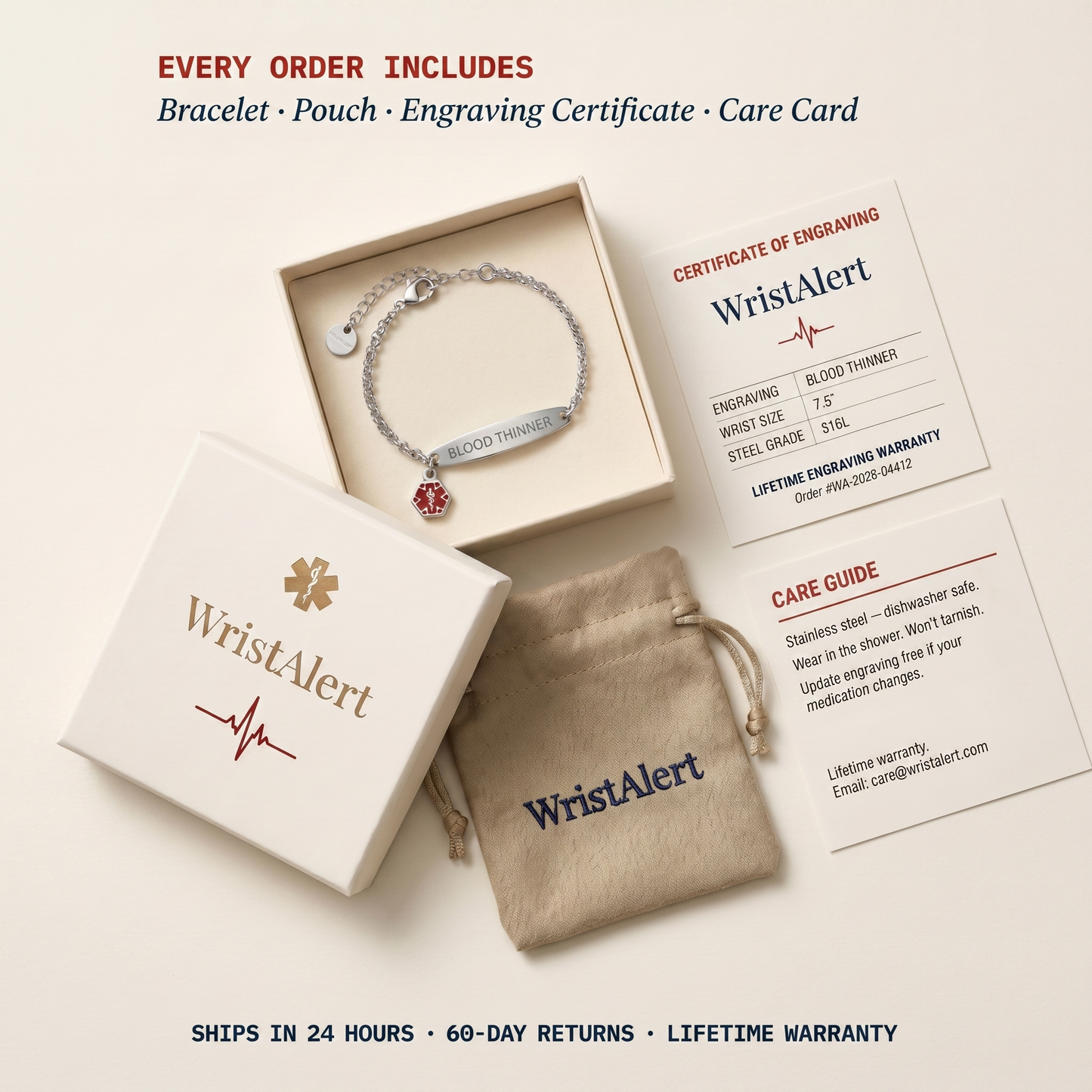
From a survey of 912 verified WristAlert customers.
Sleep easier the night they put it on.
“The first time in years I haven't lain awake wondering what would happen if I fell.”
Say their family stopped worrying out loud.
The spouse stops asking. The adult kids stop calling to check in.
Started doing things they'd been putting off.
Road trips. Solo flights. Walking the dog at dawn. The bracelet didn't slow them down — it gave them permission.
Cancelled their paid medical-ID subscription.
MedicAlert customers averaged 11 years on the service before switching. They didn't miss it.


